A Strategic Assessment from Samuel Group Inc., Washington, D.C.
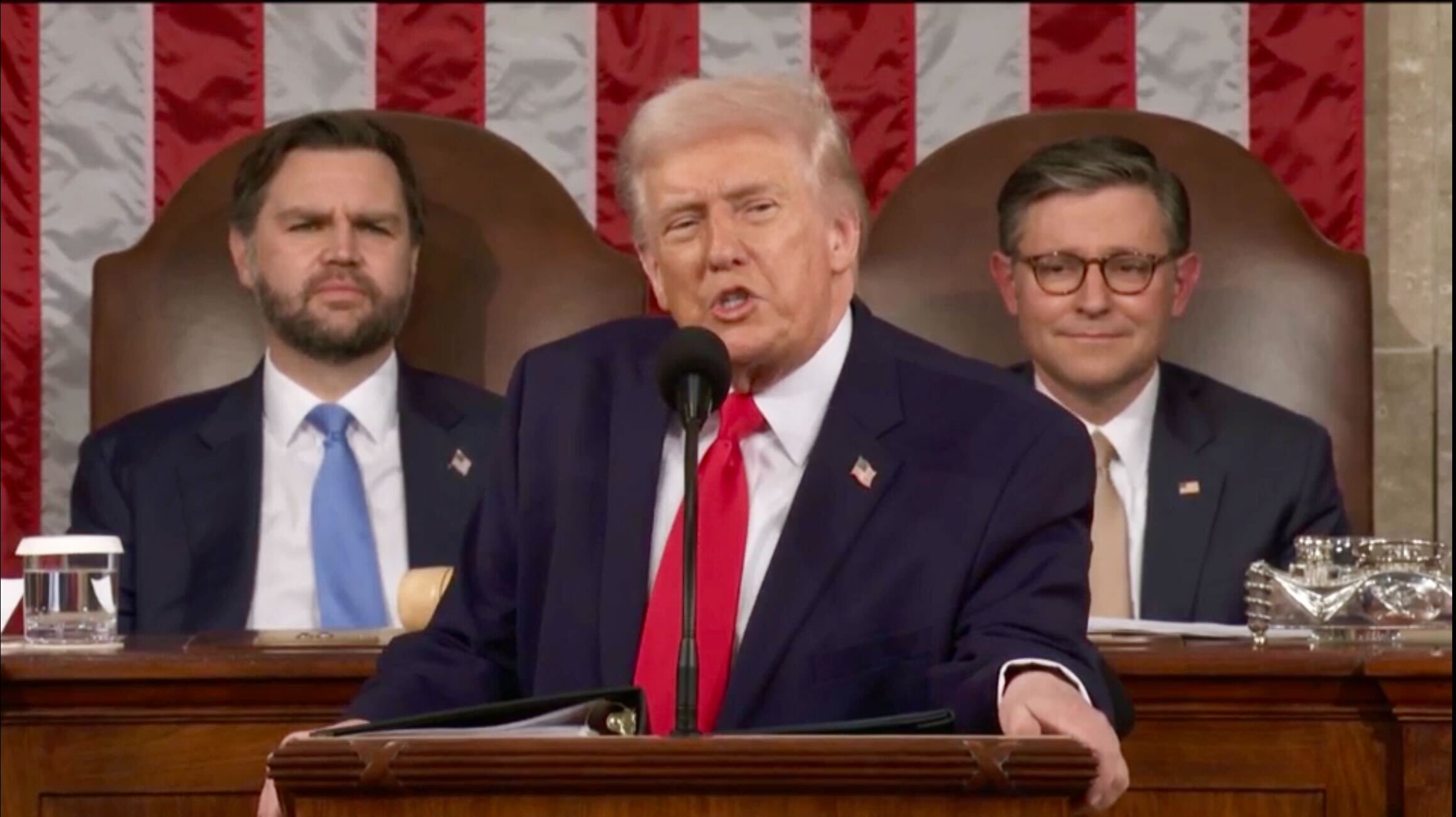
When President Donald J. Trump rose before Congress for what became the longest State of the Union address in American history, he did more than recap policy victories or challenge his political opponents. He outlined what may become the defining framework of his second-term national security posture: an America First reindustrialization strategy fused with hard-edged deterrence, executive assertiveness, and transactional alliance management.
For Washington’s defense industry, this was not political theater. It was a strategic signal.
Framing the moment as the dawn of a “golden age of America”, the President presented a doctrine that blends economic nationalism with military expansion, domestic industrial revival, and a recalibration of global partnerships. The implications for the U.S. defense industrial base are significant.
The reaffirmation of a trillion-dollar defense budget signals more than continuity. It signals consolidation.
In prior administrations, elevated defense budgets were justified primarily through great-power competition narratives or emerging threat assessments. In this address, defense spending was framed as both national security policy and economic policy. It is now positioned as a core driver of domestic manufacturing, job creation, and industrial sovereignty.
The speech made clear that reindustrialization is not a side effect of defense spending—it is an objective. The administration’s emphasis on domestic production, tariff leverage, and private-sector investment commitments reinforces a strategic alignment between Pentagon procurement and American manufacturing resurgence.
For the defense sector, this environment suggests expanded production lines, accelerated modernization programs, and long-duration sustainment contracts. Companies that can demonstrate U.S.-based production capacity, workforce development, and secure supply chains will be structurally advantaged.
Allied firms—particularly those integrated into the North American defense ecosystem—remain critical partners. However, integration will increasingly be measured by how effectively it strengthens American industrial primacy.
The President’s defense of tariff policy, including his assertion that tariffs strengthened economic and national security leverage , reinforces a worldview in which trade and security are inseparable.
Even following the Supreme Court’s ruling, the administration signaled that alternative legal authorities will preserve economic leverage. This posture institutionalizes trade instruments as tools of coercive diplomacy and industrial policy.
For the defense industry, this means supply chains will face continued scrutiny. Dual-use technologies—AI, advanced computing, aerospace components, energy systems—will increasingly fall within national security frameworks. Tariff exposure and sanctions exposure are no longer episodic risks; they are structural variables.
From Samuel Group’s Washington perspective, companies operating in aerospace, missile systems, naval platforms, cyber capabilities, and advanced manufacturing must prepare for a regulatory environment that prioritizes strategic resilience over frictionless global trade.
The speech reaffirmed a doctrine of “peace through strength,” accompanied by claims of increased allied burden-sharing and strengthened recruitment across the U.S. armed forces.
The administration signaled willingness to use force pre-emptively when deemed necessary, including reference to military action against adversarial regimes. Whether one debates the specifics of those operations, the strategic message is unmistakable: deterrence will be visible, demonstrative, and unapologetic.
For the defense industrial base, this posture translates into sustained demand for precision munitions, missile defense systems, ISR capabilities, cyber resilience, space assets, and advanced platforms. It also reinforces modernization priorities across all service branches, supported by what the President described as record recruitment gains.
This is not a retrenchment presidency. It is a capacity-expansion presidency.
A significant portion of the address focused on border enforcement, internal security, and federal law enforcement capacity. While politically charged, the operational takeaway is clear: homeland security infrastructure and federal enforcement mechanisms will receive sustained investment.
That focus carries spillover implications for the broader defense sector. Surveillance technologies, unmanned systems, biometric tools, cybersecurity platforms, and interoperable communications systems will remain areas of growth. The intersection between homeland security and defense procurement will continue to narrow.
National resilience—energy independence, grid protection, domestic manufacturing, and supply chain security—was presented as foundational to strategic power projection. Defense contractors operating at the intersection of energy, AI infrastructure, and critical systems protection should expect expanded federal engagement.
The President’s comments on NATO burden-sharing, including the assertion of increased allied defense commitments , reflect a transactional approach to alliances. Partnership remains central, but reciprocity is demanded.
For allied governments and companies, this environment requires clarity. The United States remains committed to collective defense, yet it expects tangible financial and operational alignment. Firms that can position themselves as force multipliers within U.S.-led frameworks—rather than competitors to American capacity—will find greater opportunity.
From a Washington vantage point, defense diplomacy is becoming increasingly industrial. Procurement cooperation, co-production, and technology sharing will hinge on strategic alignment with U.S. objectives.
From Samuel Group’s perspective in Washington, the State of the Union underscored a structural shift rather than a temporary political moment. The defense industry is entering a period defined by industrial nationalism, visible deterrence, executive assertiveness, and strategic supply chain recalibration.
Companies that adapt to this doctrine—by strengthening domestic production, securing compliance pathways, aligning with modernization priorities, and engaging proactively with policymakers—will be well positioned.
The President described the moment as the beginning of a golden age. For America’s defense industrial base, the question is not whether that vision will shape procurement and posture. It already is.
The only question now is who will lead within it.


Forging Our Future Together: The New Era of U.S.-Japan Relations.
GX, DX, and AI innovation at Deloitte Tohmatsu Innovation Park
USJC (U.S. - Japan Council) annual conference in Tokyo