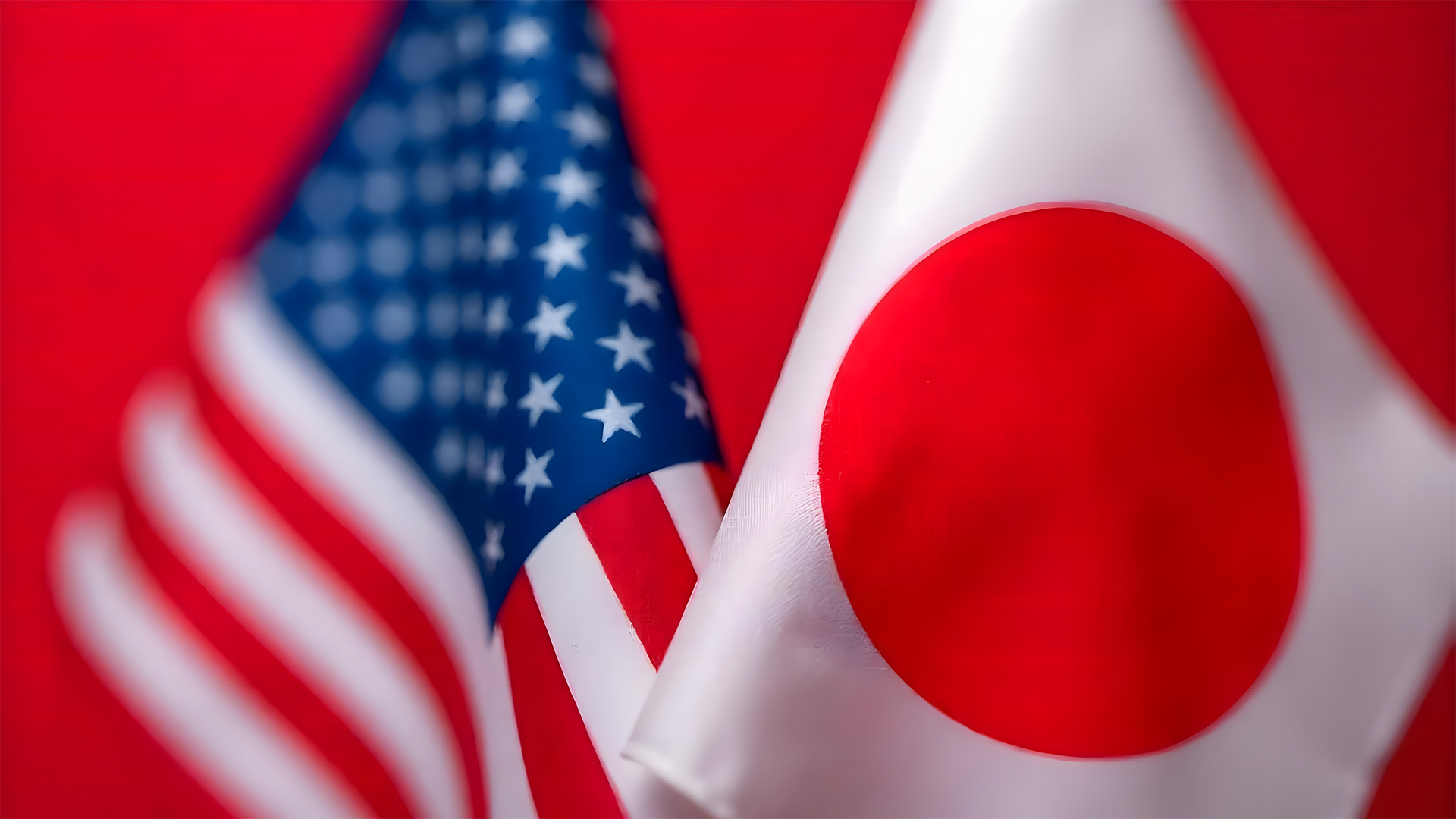
A Samuel Group Washington D.C. Strategic Assessment
Japan is undertaking the most consequential transformation of its national defense architecture since the establishment of the Self-Defense Forces in 1954. While much public attention has focused on increased defense spending and the acquisition of long-range strike capabilities, the Japanese Ministry of Defense’s latest strategic briefing reveals a more profound shift underway.
Tokyo is not simply modernizing its military—it is redesigning the way it intends to deter, fight, sustain, and prevail in twenty-first century conflict.
The transformation is driven by three strategic realities. First, China has emerged as the pacing challenge in the Indo-Pacific, rapidly expanding its military capabilities and integrating artificial intelligence, autonomous systems, and civil-military industrial capacity into its force structure. Second, Russia’s invasion of Ukraine has fundamentally altered assumptions regarding the character and duration of modern war. Third, Japan’s own demographic trajectory requires the country to substitute technology, automation, and industrial resilience for manpower.
Taken together, these forces are producing a defense strategy that extends well beyond traditional military modernization. Japan is building a whole-of-nation defense ecosystem centered on autonomous systems, artificial intelligence, resilient supply chains, alliance integration, industrial mobilization, cognitive resilience, and sustained deterrence.
For Washington, this evolution carries strategic significance far beyond Northeast Asia. Japan is increasingly positioned to become the United States’ principal defense-industrial and operational partner in the Indo-Pacific. The question facing American policymakers is no longer whether Japan will assume a larger security role, but how quickly the alliance can adapt to leverage Japan’s expanding capabilities.
For decades, the U.S.-Japan alliance was characterized by a clear division of labor: the United States projected power while Japan provided forward basing, logistical support, and regional stability. That framework is giving way to a more integrated model of allied defense.
The Ministry of Defense briefing emphasizes modernization of alliance command structures, integrated deterrence, combined planning, intelligence fusion, and coordinated defense-industrial development. The alliance is evolving from interoperability toward operational integration.
This evolution aligns closely with broader U.S. defense priorities, including Joint All-Domain Command and Control (JADC2), integrated deterrence, and the development of resilient defense-industrial supply chains. Japan’s modernization should therefore be viewed not as an independent national initiative but as an increasingly essential component of the United States’ Indo-Pacific strategy.
Perhaps the most striking feature of Japan’s assessment is the extent to which Ukraine has become a laboratory for future force design.
The Ministry identifies several enduring lessons:
These conclusions closely mirror assessments emerging from the Pentagon and major U.S. defense think tanks. Japan is therefore converging with American strategic thinking rather than pursuing an independent doctrinal path.
One of the briefing’s most important conclusions is that industrial capacity is itself a strategic capability.
Japan proposes significant investment in:
This represents a notable convergence with current U.S. defense industrial priorities, including efforts to expand munitions production, accelerate commercial technology adoption, and strengthen the Defense Industrial Base.
For Washington, Japan’s industrial transformation presents an opportunity to deepen co-production, maintenance, sustainment, and technology partnerships that improve alliance resilience while reducing dependence on fragile global supply chains.
Japan’s briefing leaves little doubt that autonomous systems will become central to future force structure.
Rather than viewing drones as niche capabilities, the Ministry integrates unmanned systems across air, maritime, and land domains while pairing them with artificial intelligence, electronic warfare, and resilient command networks.
This reflects a broader transition from platform-centric warfare toward network-centric operations.
For the United States, this convergence creates opportunities for expanded collaboration in autonomous maritime systems, AI-enabled command and control, counter-UAS technologies, electronic warfare, and distributed sensing architectures.
The Ministry’s discussion of cognitive warfare represents one of the most significant conceptual developments in the briefing.
Japan recognizes that future strategic competition will unfold continuously through information operations, cyber campaigns, influence activities, and efforts to undermine public confidence and alliance cohesion.
Drawing heavily on lessons from Ukraine, Tokyo proposes stronger strategic communications, AI-enabled information analysis, OSINT integration, and institutional mechanisms to counter disinformation before crises emerge.
For Washington, this reinforces an increasingly accepted principle: deterrence now extends beyond military capability to include the resilience of democratic institutions and public trust.
Japan’s transformation presents several implications for U.S. policy.
First, the alliance should move beyond traditional interoperability toward deeper operational integration across command-and-control, logistics, sustainment, and defense production.
Second, defense-industrial cooperation should become a central pillar of alliance management. Shared manufacturing capacity, resilient supply chains, and co-development of emerging technologies will increasingly determine the alliance’s ability to sustain operations during prolonged conflict.
Third, greater emphasis should be placed on integrating commercial innovation ecosystems. Japan’s growing engagement with startups, universities, and dual-use technologies closely parallels developments within the United States and creates opportunities for collaborative innovation.
Finally, Japan’s growing role within a wider network of Indo-Pacific partners—including Australia, the United Kingdom, the Republic of Korea, the Philippines, NATO partners, and Canada—offers Washington an opportunity to strengthen a more distributed and resilient regional security architecture.
Although the strategic implications are primarily American, Japan’s modernization also presents meaningful opportunities for Canada.
Canada’s strengths in Arctic and maritime surveillance, advanced radar, aerospace, artificial intelligence, autonomous systems, cyber capabilities, and advanced manufacturing align closely with several of Japan’s modernization priorities.
Rather than approaching the Indo-Pacific solely through diplomatic engagement, Ottawa has an opportunity to position Canadian industry as a trusted contributor to allied defense production, maritime domain awareness, AI-enabled command systems, and resilient supply chains. As U.S.-Japan industrial cooperation expands, Canadian firms could play an important supporting role within trilateral or multinational production ecosystems, particularly where North American integration and trusted supply chains provide strategic advantage.
Japan’s defense transformation is not simply a response to a deteriorating regional security environment. It reflects a broader recognition that military power in the twenty-first century will be determined by the integration of operational capability, industrial resilience, technological innovation, and allied cooperation.
For Washington, the significance lies not only in Japan’s increased defense spending but in its emergence as a more capable strategic partner whose modernization closely aligns with evolving U.S. concepts of integrated deterrence and multi-domain operations.
For the United States and its allies, including Canada, the opportunity now is to move beyond traditional alliance management and build a genuinely integrated defense ecosystem capable of sustaining long-term strategic competition in the Indo-Pacific. The countries that succeed will not necessarily be those with the largest inventories of military hardware, but those able to combine innovation, industrial capacity, operational integration, and political cohesion into a durable system of collective deterrence.


Forging Our Future Together: The New Era of U.S.-Japan Relations.
GX, DX, and AI innovation at Deloitte Tohmatsu Innovation Park
USJC (U.S. - Japan Council) annual conference in Tokyo